
Amaravati is the present capital of Andhra Pradesh.

The idea of three capitals has not been abandoned, even as the state lurches from financial crisis to crisis.

Education sector experts agree that using the "best technology" was essential to ensure students did not have to sit for an examination all over again because of a question paper leak.
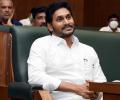
Chief Minister Y S Jagan Mohan Reddy, however, told the Assembly his government would bring a 'comprehensive, complete and better' Decentralisation Bill.

The Supreme Court on Monday sought responses from farmers and their associations, and the Centre to a plea by the Andhra Pradesh government challenging the high court decision which said the state legislature "lacked competence" to make any law for shifting, bifurcating or trifurcating the capital.
Power and money are at the heart of the sordid story -- and it isn't over yet.
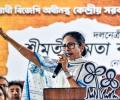
'The question for the TMC is not whether it can hold its bastions, but whether it can expand effectively into regions where the BJP already possesses a good ecosystem.'
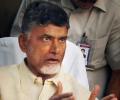
The Chandrababu Naidu government on Thursday formally announced in the state assembly that Andhra Pradesh's new capital will be built "in and around Vijayawada". Rediff.com was the first to report the story (below) on May 18.
The decision about the high-powered committee was taken as the government apparently thought of taking one step at a time instead of hurrying things up in the face of growing resistance from farmers who gave their lands for the development of Amaravati as the new capital, under the previous government headed by N Chandrababu Naidu, reports Dasarath Reddy.
Defending its three-capital decision, the government said since inception in 1956 the state had failed to integrate people from all regions, reports B Dasarath Reddy.
The move by the Andhra Pradesh cabinet came after the Y S Jaganmohan Reddy government last week failed to pass in the Upper House of the state legislature two crucial Bills related to its plan of having three capitals for the state.

17 MLAs of the TDP were suspended from the assembly for disrupting CM Jagan Mohan Reddy's address on the Andhra Pradesh Decentralisation and Inclusive Development of All Regions Bill, 2020.

The Bhratiya Janata Party has justified its poll alliance with the Telugu Desam Party in Andhra Pradesh despite critical comments made in the past by TDP chief N Chandrababu Naidu.

If the BJP gets only 200 seats and wants to remain in power, Modi will have to make way -- either for a proxy of his choice, or for an internal rival, predicts Nilanjan Mukhopadhyay.

While Congress-ruled states such as Kerala, Karnataka and Assam expressed fears about the sudden demise of the planning process and wondered what it would be replaced with, also worrying about the immediate implications on annual Plan outlays, Andhra Pradesh said it was considering setting up its own NITI Aayog.
On one hand, South Indian states have been complaining about denial of a proportionate portion of the sharable funds from the Centre, based on population. On the other hand, they stand to lose Lok Sabha and Rajya Sabha seats that again are based on population, points out N Sathiya Moorthy.

The government said it had been evaluating the implementation of the decentralised model of vaccination since its launch on May 1 and that the decision to centralise it again was taken after detailed deliberations and following requests by some states, amid claims by the Opposition that the policy change was due to the Supreme Court's intervention.
After the BJP lost the recent assembly polls, one of Shah's first acts was to appoint new prabharis before the Lok Sabha election. Radhika Ramaseshan reports on the significance of this post that doesn't exist in the BJP's constitution.

A magnificent display of India's cultural diversity through colourful parades across the length and breadth of the country marked the 71st Republic Day celebrations on Sunday which passed off peacefully, barring in Upper Assam, which was rocked by four explosions within a span of 10 minutes.
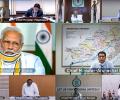
During his interaction with the chief ministers, Prime Minister Narendra Modi assured that more economic activities would resume; he also said that zone identification may be left to the states.
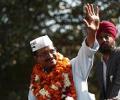
A party demanding meaningful change seems to have touched a deep chord among voters, says Sreelatha Menon

At present there is virtually no dialog between votaries of different various versions of economic democracy.

Unlike in the past, Modi made candid, frank and direct remarks on his hosts by suggesting that the Chinese side is holding back on further improving relations, says Srikanth Kondapalli.

'One per cent of wealthy people have been handed over 99 per cent of our nation's resources. The rest are mute, helpless and very frightened spectators to this loot.'

There is mounting evidence that the Information Revolution may mean the end of large-scale vertically integrated businesses whose guiding principle, "economies of scale", was the defining miracle of the Industrial Age.

The savings would be better spent and might actually reach the poor, says Rahul Khullar.
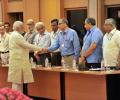
From Swachh Bharat to spearheading the Make in India campaign, the PMO seems to be at the centre of all policies, writes Nivedita Mookerji.

A provision of Rs 15,000 crore has been made in the budgetary estimate of 2016-17 towards interest subvention.
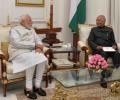
'Wisdom demands Modi moves to restore the critical institutions of the State and dial back on the cult building around his persona,' say Sonali Ranade and Shealja Sharma.

'It is good for the country, but it is not good for a politician... What we call impatience is actually desperation to needing something NOW.' 'Our politics is restricted by one factor; that our Parliament is full of villages. 40% of the country now lives in cities but only 25% of Parliament is coming from the cities.'
Prime Minister Narendra Modi on range of issues -- from Rafale deal to Ram temple and triple talaq.
